// blog
DICOMweb vs Classic DICOM Networking (DIMSE), for Web Developers
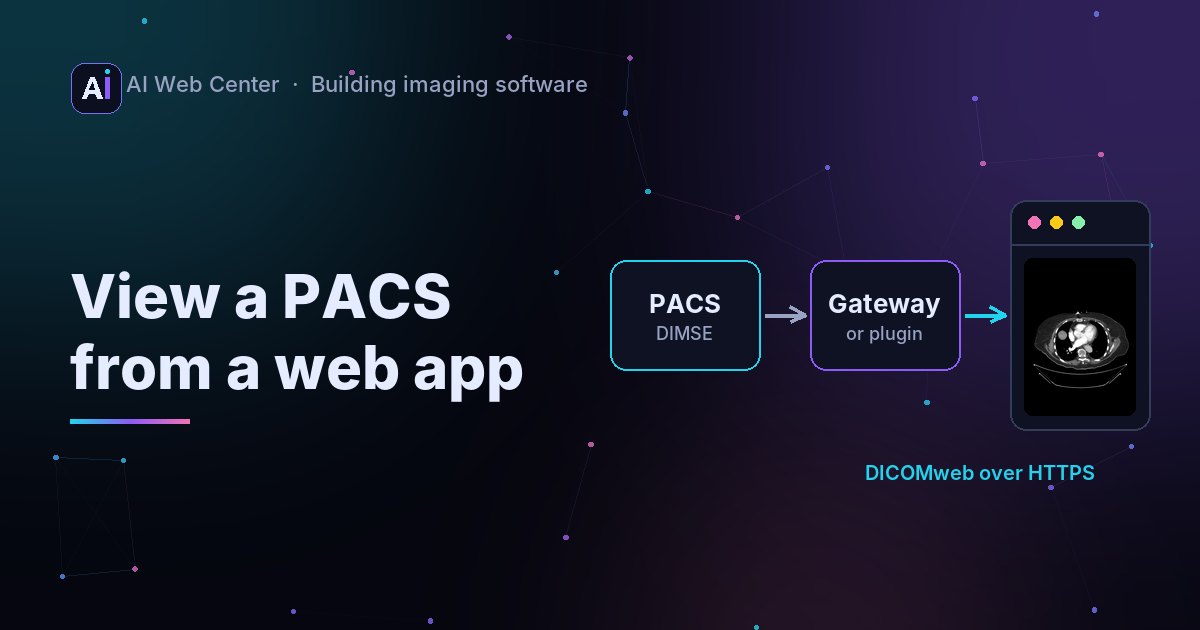
Classic DICOM networking (DIMSE, defined in PS3.7 and PS3.8) uses its own binary protocol over TCP: systems open an association between named Application Entities and exchange commands like C-ECHO, C-FIND, C-MOVE, C-GET and C-STORE. DICOMweb (PS3.18) offers the same over HTTPS: QIDO-RS to search, WADO-RS to retrieve, STOW-RS to store, with JSON metadata. A web app should speak DICOMweb, through a gateway if the archive only speaks DIMSE.
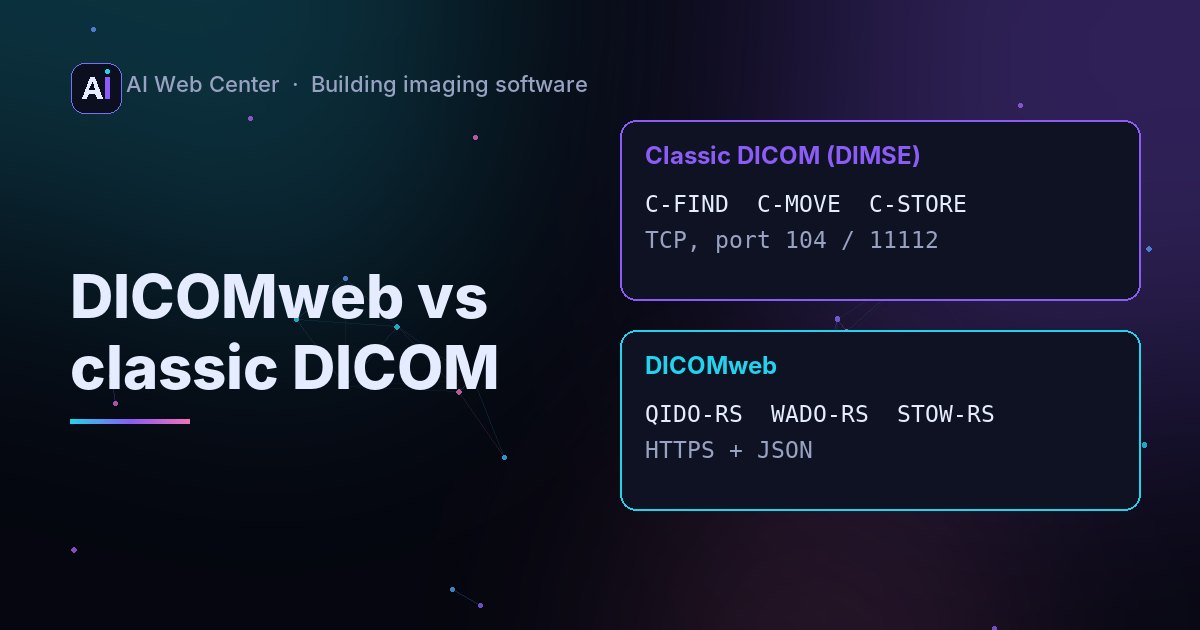
Ask a hospital how images get from the scanner to the archive and the answer is DICOM networking, a protocol older than the web. Ask how a web app should get them and the answer is DICOMweb. Same standard, two very different styles.
Classic DICOM: DIMSE
Defined in PS3.7 (the messages) and PS3.8 (the network), it runs over its own binary protocol on TCP:
- Systems are Application Entities with a title (
AE title), a host and a port. Port 104 is traditional; 11112 is registered for DICOM. - Two systems open an association, agree which kinds of objects and encodings they’ll exchange, then send commands.
The commands you’ll use:
| Command | Does |
|---|---|
| C-ECHO | “Are you there?” |
| C-FIND | Search: patients, studies, series, images |
| C-MOVE | Ask the archive to send images to a destination AE |
| C-GET | Ask for images back on the same connection |
| C-STORE | Send an image |
The free OFFIS DICOM Toolkit (DCMTK) has a command-line tool for each: echoscu, findscu, movescu, getscu, storescu, and storescp to receive.
The classic pain: C-MOVE makes the archive open a new connection back to you, so it must know your AE title, host and port, and the firewall must let it in.
DICOMweb
Defined in PS3.18, it’s the same model as REST over HTTPS:
| Service | HTTP | Does |
|---|---|---|
| QIDO-RS | GET /studies?PatientID=… |
Search, returns JSON |
| WADO-RS | GET /studies/{study}/series/{series}/instances/{instance} |
Retrieve files, metadata, single frames or rendered images |
| STOW-RS | POST /studies |
Store |
Metadata comes as JSON, keyed by tag ("00100010" for Patient Name). WADO-RS can return just one frame, or a rendered JPEG or PNG, which a browser can show directly. There’s also the older WADO-URI, a single GET with query parameters.
Which to use
- A web app or a mobile app: DICOMweb. Browsers can’t open DIMSE connections.
- Scanner to archive, archive to archive: usually DIMSE, because that’s what the equipment speaks.
- Your archive only speaks DIMSE: put a gateway in between that speaks DIMSE to the archive and DICOMweb to your app. Some archives have DICOMweb built in or as a plugin.
Things that bite
- Large responses. A CT study is hundreds of megabytes. Retrieve series or frames as needed, not whole studies.
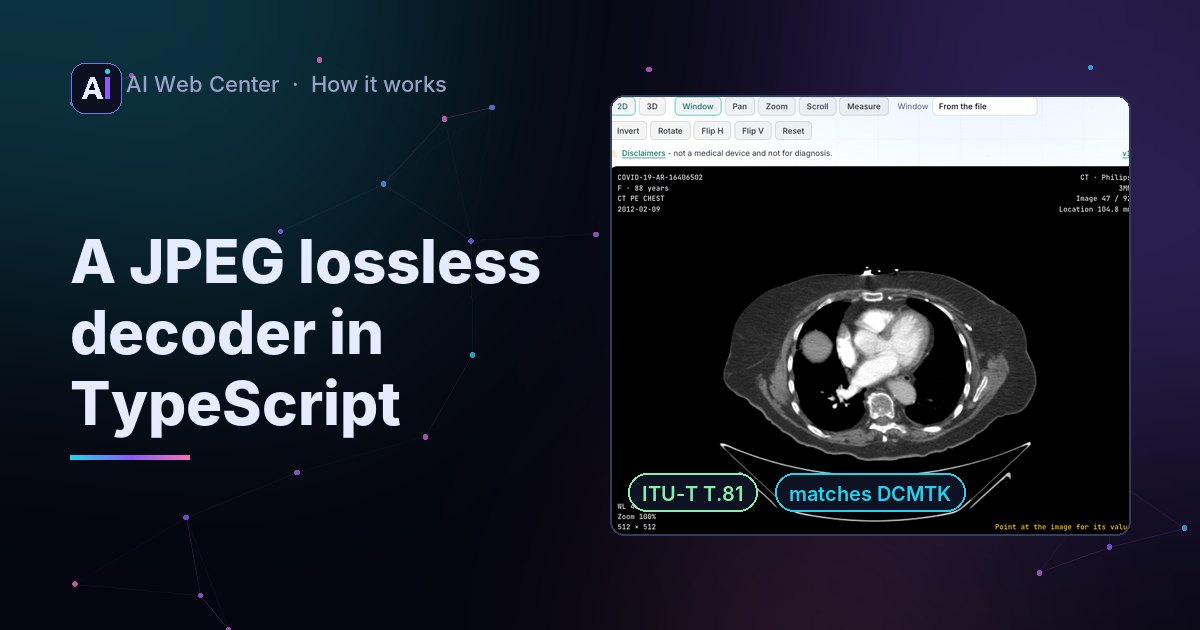
- Transfer syntax. Ask for one the browser can decode, or have the server transcode. Browsers can’t decode JPEG lossless, JPEG 2000 or JPEG-LS themselves; a viewer has to bring its own decoder.
- Authentication. DIMSE has little of it; DICOMweb sits behind your normal HTTPS sign-in. Never expose an archive’s DIMSE port to the internet.
Key takeaways
- DIMSE: associations between AE titles, C-FIND / C-MOVE / C-GET / C-STORE over TCP.
- DICOMweb: QIDO-RS / WADO-RS / STOW-RS over HTTPS with JSON.
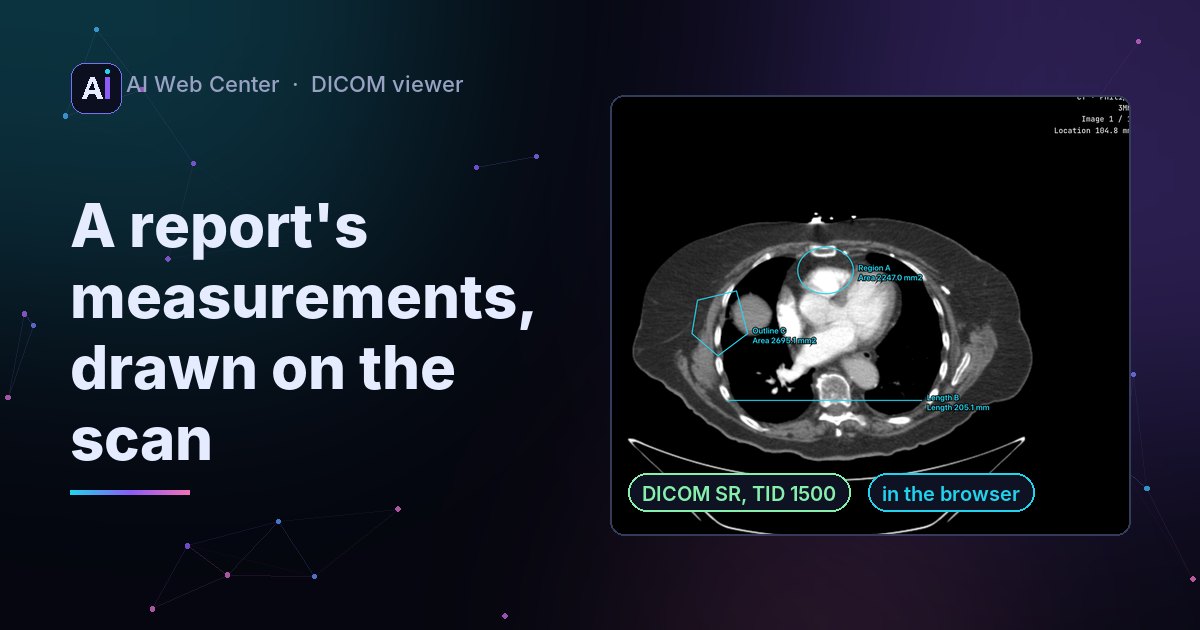
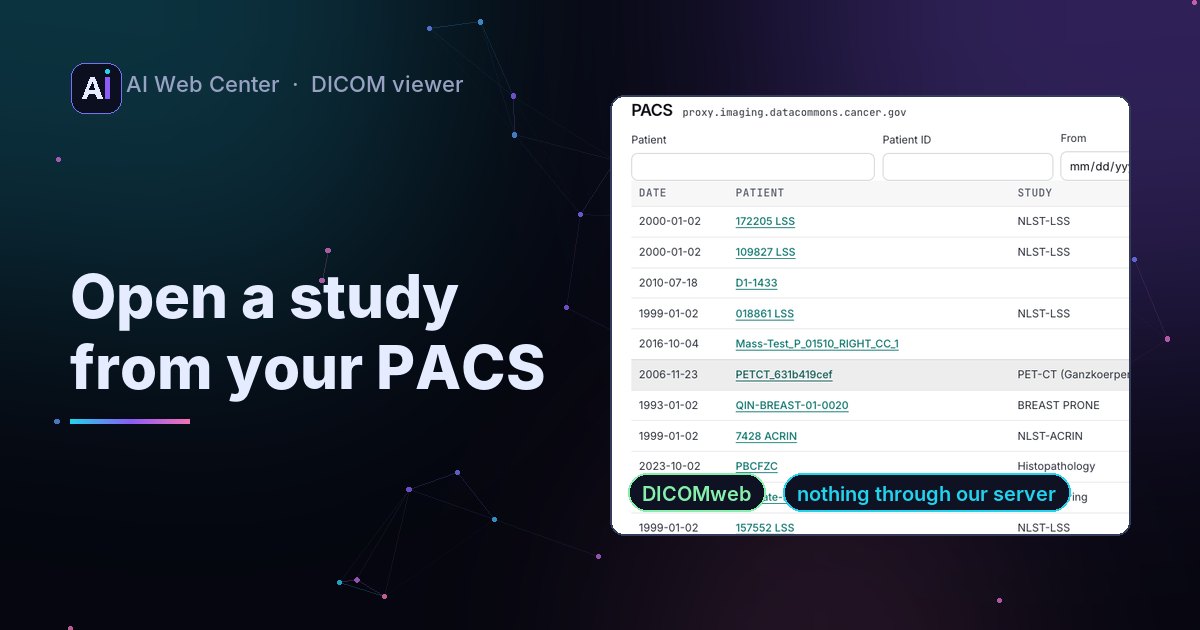
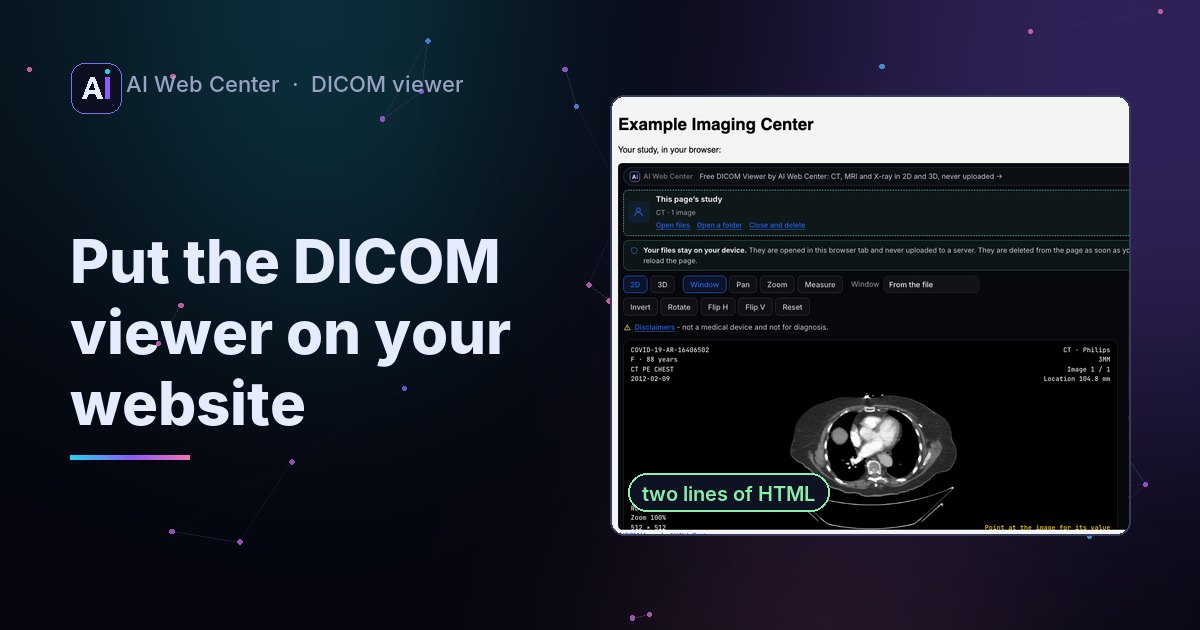
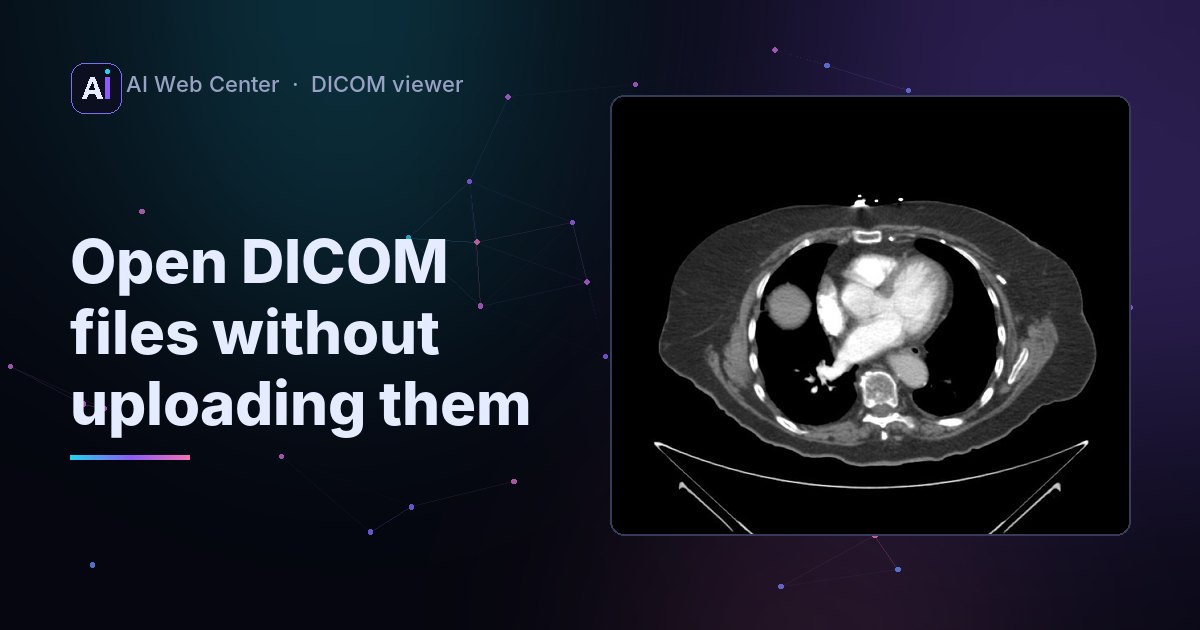
- Browsers need DICOMweb; a gateway bridges DIMSE-only archives. Our free DICOM viewer can open a study from a PACS over DICOMweb.
- Retrieve only what you show, in an encoding the browser can decode.
We’re glad to share what we know. When you want your web app connected to a PACS, we’ll put all of it to work on your project, and because we build with AI-assisted development, it costs far less than you might expect. Let’s talk.
Frequently asked questions
Can a browser speak classic DICOM?
No. DIMSE runs over raw TCP connections, which browsers can't open. A web app needs DICOMweb, either from the archive itself or from a gateway in between.
Why does C-MOVE cause firewall trouble?
With C-MOVE, the archive opens a new connection back to the destination you name, which it must know by Application Entity title, host and port. C-GET returns the images over the same connection, which is simpler through firewalls but less widely supported.
Which ports does DICOM use?
Port 104 is the traditional one, and 11112 is registered for DICOM; many sites configure their own. DICOMweb uses ordinary HTTPS.