// blog
Classic ASP to a Modern Web App: Pages, VBScript and Old Logins
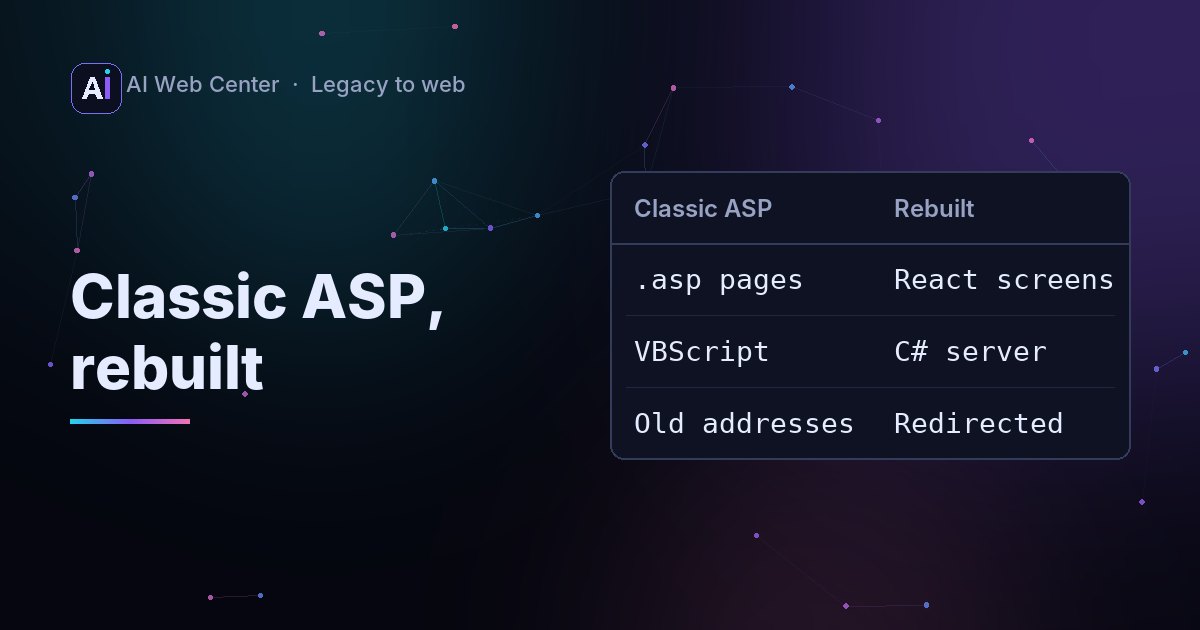
When a Classic ASP application moves to a modern stack, its .asp pages become React screens backed by a C# server, the logic mixed into pages and includes is written down and built once, its SQL Server or Access data is moved and checked, COM components are replaced by server code, the home-made login becomes modern sign-in, and old addresses are redirected so bookmarks keep working.
Classic ASP portals from the late 1990s and 2000s are still running inside many companies: order lookups, timesheets, the customer list. They work, on an old Windows server, and nobody wants to touch them.
Pages and logic
In Classic ASP the logic is mixed into the pages: VBScript next to the HTML, shared through include files. Each rule is pulled out and written down as a plain sentence, checked by the people who use the portal, and built once in a C# server. The pages become React screens.
Data and components
ADO data on SQL Server or Access moves to your SQL Server or to PostgreSQL, with the records checked. COM components and DLLs the pages call are replaced by server code or standard services.
Sign-in and addresses
A home-made login becomes modern sign-in with user rights and a change log. Old .asp addresses that people or other sites use are redirected to the new pages, so bookmarks keep working.
Only what’s still used
Every page is listed in the first look, and you decide which ones move. Pages nobody opens anymore don’t have to come along.
See how a Classic ASP application is rebuilt. The first call is free.