// blog
What Is a Medical AI Agent? A Software View, for Clinics and Imaging Centers
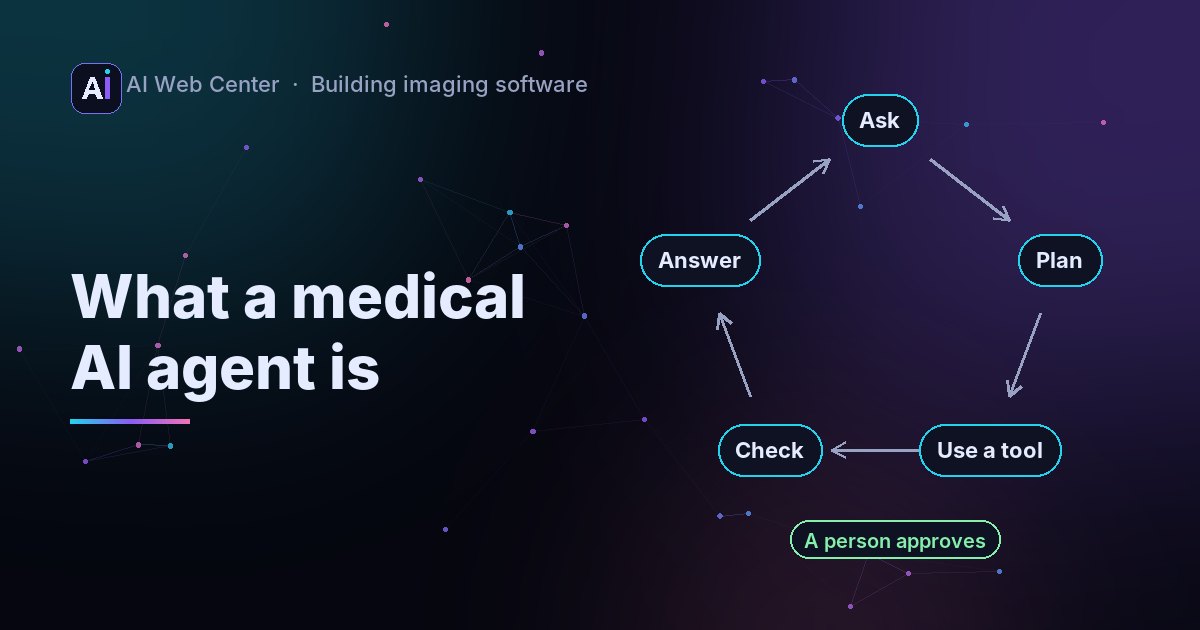
An AI agent is a language model given a goal, a set of tools (search your documents, look up a calendar, fill a form) and a loop: it plans, uses a tool, checks the result and repeats until the task is done. In a clinic or imaging center, agents suit administrative work such as scheduling questions, preparation instructions from the center’s own documents, and sorting incoming paperwork. They need narrow tools, a person approving actions, logs, and no role in diagnosis.
“AI agent” is used for almost anything with a chat box. In software terms it means something specific, and that matters for how much it can be trusted in a clinic.
What an agent is
An agent is a language model with three things around it:
- A goal: “find this patient a time for an MRI knee next week”.
- Tools it can call: search the center’s documents, read the calendar, draft a message, fill a form.
- A loop: plan a step, call a tool, look at the result, decide the next step, until the goal is met or it hands over to a person.
A chatbot answers. An agent acts, which makes it useful and means it needs limits.
Where it fits in a clinic or imaging center
The good jobs are administrative, repetitive and checkable:
- Scheduling questions: “Can I move my scan to Thursday?” The agent reads the calendar and proposes slots; staff or the patient confirm.
- Preparation and visit questions, answered from the center’s own approved documents, with the source shown.
- Sorting incoming paperwork: referral faxes and forms read, matched to the right patient and order, and queued for a person to approve.
- Drafting: replies, reminders and summaries of a call, for staff to edit and send.
What it shouldn’t do: interpret scans, suggest diagnoses or decide on care. That’s the radiologist’s and the doctor’s work.
The guardrails
- Narrow tools. Give it “propose a slot”, not “write to the database”.
- A person approves actions that change anything: bookings, messages, records.
- Answers from your sources, shown with the source, and “I don’t know” when the documents don’t say.
- Logs of every tool call and answer, for review and for the audit trail.
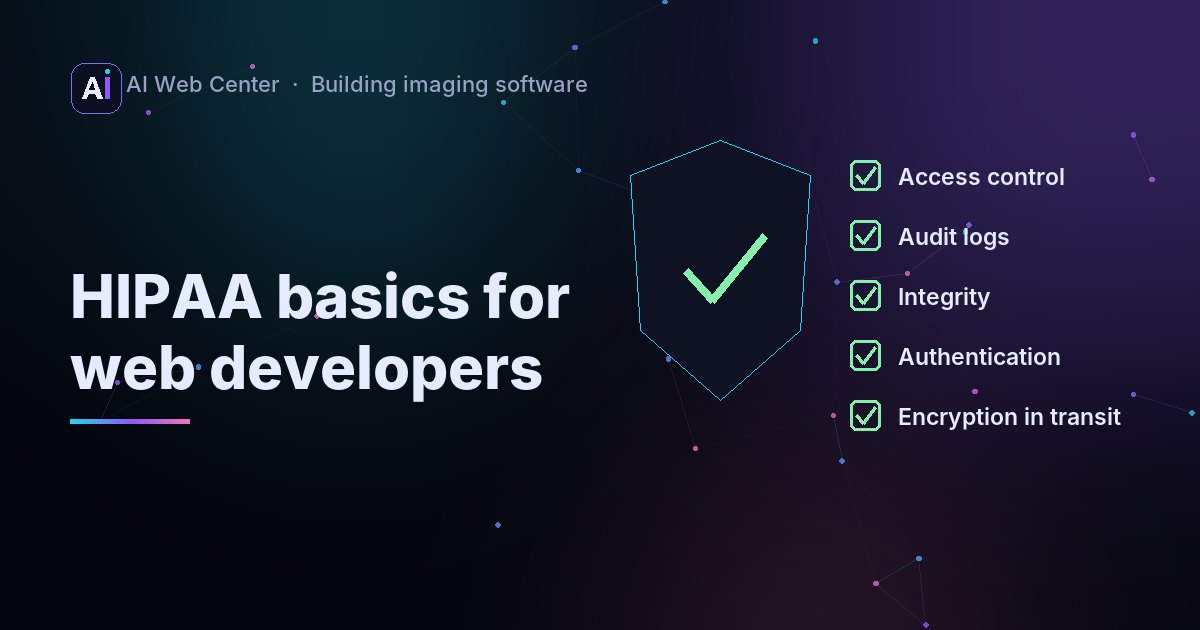
- Patient data, minimized. Send the model only what the task needs, through a provider that signs a business associate agreement. See HIPAA basics for web developers.
- Tested on real questions before it meets real patients, and watched after.
Regulation, briefly
Software that analyzes medical images or data to diagnose or treat can be regulated as a medical device; the FDA’s page on AI in software as a medical device is the place to start. Administrative agents stay clear of that by staying out of clinical decisions.
Key takeaways
- Agent = model + tools + a loop toward a goal.
- In clinics, it suits scheduling, paperwork, drafting and answers from your own documents.
- Narrow tools, a person approving actions, sources shown, everything logged.
- Keep it out of diagnosis.
We’re glad to share what we know. When you want an assistant built into your own practice’s software, with these guardrails, we’ll put all of it to work on your project, and because we build with AI-assisted development, it costs far less than you might expect. Let’s talk.
Frequently asked questions
Can an AI agent read scans or make diagnoses?
Not in what we build. Software that analyzes medical images for diagnosis can be regulated as a medical device, and it needs clinical validation. The agents in this post handle administrative work around care, with a person approving what they do.
How is an agent different from a chatbot?
A chatbot answers. An agent can act: look things up, fill in a form, propose a booking, then check its own work. That's also why it needs tighter limits.
What about patient data sent to the AI provider?
Treat the model provider like any vendor that handles patient data: use one that signs a business associate agreement, send only what the task needs, and log what was sent.